
It starts with a dripping faucet that suddenly stops dripping. Or maybe you turn on a tap one cold morning and nothing comes out at all. If you live somewhere that gets genuinely cold winters, you already know what that sick feeling means — frozen pipes.
Knowing how to fix frozen water pipes before they burst is one of those skills that can save you from a very expensive, very stressful week. A single burst pipe can dump hundreds of gallons of water into your walls, floors, and ceilings.
The good news? If you catch it early enough, thawing a frozen pipe is genuinely something most homeowners can handle themselves. This guide walks you through everything — from confirming you actually have a frozen pipe, to thawing it safely, to knowing when the situation has gone beyond a DIY fix.
How Do You Know a Pipe Is Actually Frozen?
Before you start tearing open walls or blasting heat at your plumbing, make sure you’re actually dealing with a frozen pipe. Here are the telltale signs:
- No water — or just a trickle — comes from a faucet during cold weather.
- Visible frost on an exposed pipe, usually under a sink, in a basement, or in a crawl space.
- A strange smell from the drain or faucet, which can happen when the freeze blocks gas from escaping.
- The pipe feels extremely cold to the touch compared to other nearby pipes.
- You hear strange banging or crackling sounds when you try to run water.
The most vulnerable spots are pipes along exterior walls, pipes in unheated spaces like garages and crawl spaces, and any plumbing that runs through an uninsulated cabinet — like the pipes under a kitchen sink on an outside wall.
Before You Start: The Two Things to Do First
These two steps take about two minutes combined, but skipping them can turn a minor inconvenience into a major disaster.
1. Locate Your Main Water Shut-Off Valve
Find it before you need it. In most homes it’s near the water meter — often in a basement, utility room, crawl space, or outside near the foundation. If the pipe does burst while you’re working on it, you want to be able to shut the water off within seconds, not minutes.
2. Open the Affected Faucet
Turn on the cold-water tap connected to the frozen pipe. Opening the faucet does two things: it relieves pressure as the ice starts to melt, and it tells you when the pipe has fully thawed because water will start flowing again. Keep both the hot and cold handles open if the fixture has separate handles.
How to Fix Frozen Water Pipes: Safe Thawing Methods
The goal is slow, even heat. You are not trying to cook the pipe — you’re trying to gently coax a solid block of ice back into liquid. Work from the faucet end of the pipe back toward the freeze point, never from the middle. This lets water and steam escape rather than building up pressure between two ice plugs.
Hair Dryer (Best First Option)
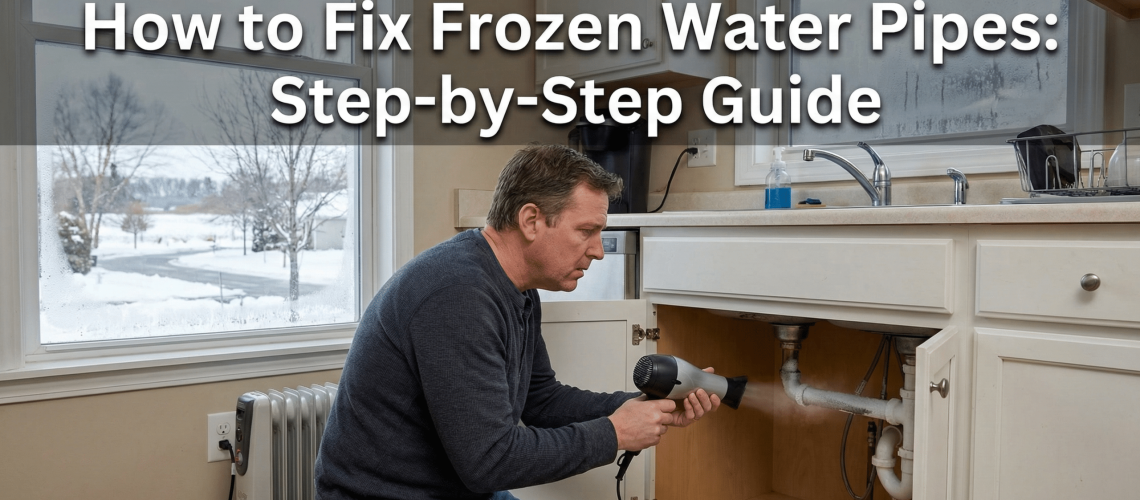
A standard hair dryer is genuinely one of the best tools for this job — it’s controllable, portable, and safe for most pipe materials. Set it to a medium heat setting and sweep it back and forth along the frozen section. Don’t hold it stationary on one spot. Keep the cord away from any water and use an extension cord if needed to avoid working near a puddle.
Electric Heating Pad or Towels Soaked in Hot Water
Wrap an electric heating pad or hot damp towels around the frozen section of pipe. This works well for pipes in tight spaces where a hair dryer is awkward to maneuver. Replace the towels as they cool and keep adding heat until water flows normally from the open faucet.
Portable Space Heater
If the frozen pipe is in an enclosed space like a crawl space or basement, a small space heater pointed in the general direction of the pipe can do the trick. This works more slowly than direct heat, but it’s hands-free once set up. Keep combustibles clear and never leave it unattended.
Infrared Lamp
An infrared heat lamp works similarly to a space heater but concentrates heat more directly. Good for pipes in a garage or basement. Keep it a safe distance from the pipe and any insulation.
How to Fix a Frozen Drain Pipe
Frozen drain pipes are a different animal from frozen supply pipes. Your drain lines carry wastewater, not pressurized water, so they are less likely to burst — but they can still back up and cause serious problems.
Signs of a frozen drain include slow or completely blocked drainage, gurgling sounds when you run water elsewhere in the house, and water backing up into a sink or tub.
To fix a frozen drain pipe:
- Locate the frozen section — usually a drainpipe that runs along an exterior wall or through an unheated space.
- Apply gentle, indirect heat using a space heater or heat lamp near the affected section.
- Pour warm (not boiling) water down the drain slowly to help melt ice from the inside.
- Use a drain snake or auger to break up ice near the drain opening if the blockage is close to the surface.
- Avoid chemical drain openers — they won’t thaw ice and can damage pipes.
If the drain is still blocked after all this, the freeze may be deeper in the line than you can reach. That’s a job for a plumber with proper equipment.
How Long Does It Take to Fix Frozen Pipes?
This is the question everyone wants a straight answer to, and the honest response is: it depends. A pipe that’s only slightly frozen and easy to access might thaw in 20–30 minutes with a hair dryer. A heavily frozen pipe deep inside a wall or buried in a crawl space could take several hours — or require professional equipment to reach at all.
Here’s a rough time guide based on situation:
| Situation | Estimated Time |
| Slightly frozen, exposed pipe | 20–45 minutes |
| Moderately frozen, accessible pipe | 1–2 hours |
| Heavily frozen, partially accessible | 2–4 hours |
| Pipe inside a wall or ceiling | Several hours to all day |
| Multiple frozen sections | Could require 1–2 days or a plumber |
One thing to keep in mind: patience beats aggressive heat. Rushing the process with too-high heat can cause pipes to crack as they expand unevenly. Slow and steady genuinely wins here.
When to Call a Professional
There are situations where DIY thawing is the wrong call. Stop and call a licensed plumber if:
- You can’t locate or access the frozen section of pipe.
- There are visible cracks, splits, or signs of bulging in the pipe.
- Water is already leaking — shut off the main valve and call immediately.
- The freeze is inside a finished wall or ceiling.
- Multiple pipes are frozen throughout your home.
- You’ve been applying heat for over 45 minutes with no progress.
If a pipe has already burst, you’re now dealing with water damage restoration — not just a plumbing fix. That means calling a water damage specialist, not just a plumber, to assess and dry out the affected areas before mold has a chance to develop.
How to Prevent Frozen Pipes Next Winter
Once you’ve been through a frozen pipe situation, you’ll want to make sure it doesn’t happen again. A few simple habits make a big difference:
- Keep cabinet doors open under sinks on exterior walls during cold snaps — this lets warm household air circulate around the pipes.
- Let a cold-water faucet drip slowly on nights below 20°F — moving water is much harder to freeze than standing water.
- Insulate exposed pipes in crawl spaces, attics, and garages using foam pipe insulation (inexpensive and easy to install).
- Keep your thermostat set to at least 55°F even when you’re away from home.
- Disconnect outdoor garden hoses and shut off exterior faucets before the first freeze.
- Know where your main shut-off valve is before winter arrives.
Frequently Asked Questions
Can I still use water if one pipe is frozen?
It depends on where the freeze is. If only one branch line is frozen — say, the pipe feeding a single faucet — the rest of your plumbing may work fine. Avoid running water from the affected fixture, but other parts of the house should be usable. That said, check all your faucets to make sure the issue isn’t more widespread than it appears.
How do I know if a frozen pipe has already burst?
Water stains on walls or ceilings, wet flooring, the sound of dripping inside a wall, or a sudden drop in water pressure after thawing are all signs a pipe has burst. If you thaw a pipe and water pressure doesn’t come back normally — or you see wet spots you didn’t see before — shut off your main water supply and call a plumber right away.
How long does it take to fix frozen pipes if I call a plumber?
A professional plumber typically carries equipment that can locate and thaw frozen pipes much faster than DIY methods. For most accessible freezes, a plumber can resolve the issue in 1–3 hours. Pipes embedded in walls or floors take longer and may require opening up the structure. Emergency callout fees and repair costs vary widely by region.
Will pipes freeze at 32°F?
Technically, water freezes at 32°F — but pipes usually don’t freeze until temperatures drop to around 20°F or below, especially if they’re inside a heated structure. Pipes in unheated spaces like garages, crawl spaces, or along exterior walls are at risk much sooner since they don’t benefit from the warmth of the rest of the house.
Is it safe to use a heat gun to thaw frozen pipes?
A heat gun on a low setting can work on metal pipes, but it requires real caution — and should never be used on plastic or PVC pipes. The risk of overheating a single spot and cracking the pipe (or igniting nearby materials) is real. A hair dryer is almost always the safer choice, especially for a homeowner who doesn’t work with heat tools regularly.
Key Takeaways
Frozen pipes are stressful, but they’re manageable if you act quickly and carefully. Here’s the short version of everything covered above:
- Confirm it’s a frozen pipe by checking for no water flow, frost on pipes, or unusual cold during sub-freezing weather.
- Turn off your main water valve location before you start — just in case.
- Open the faucet before and during thawing to relieve pressure.
- Use safe heat sources: hair dryer, heating pad, space heater, or infrared lamp.
- Never use open flame, boiling water, or high-powered heat guns.
- Thawing typically takes 20 minutes to several hours depending on severity.
- Call a plumber if you see signs of a burst pipe, can’t locate the freeze, or make no progress after 45 minutes. If water damage has already occurred, contact a water damage restoration professional
- Prevent future freezes with insulation, dripping faucets, and cabinet doors open on cold nights.
If a pipe has already burst and you’re dealing with water damage, don’t wait. Moisture that sits inside walls and floors for more than 24–48 hours can lead to mold growth that costs far more to remediate than the original pipe repair. Getting a water damage restoration professional on-site fast makes a real difference in the final outcome.
Other Services : Fire Damage Restoration | Tile Cleaning Branson | Air Duct Cleaning