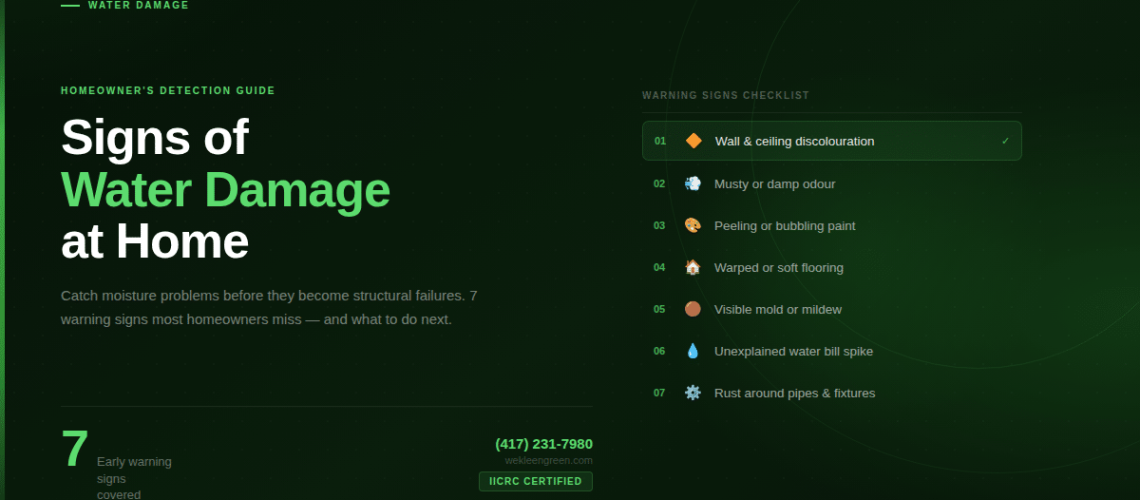
Water damage is one of the most expensive problems a homeowner can face — and the worst part is that it often goes unnoticed until it has already caused serious structural harm. Unlike a burst pipe or a flooded basement, many forms of water damage develop slowly and silently behind your walls, under your floors, and above your ceilings. By the time you see visible damage, the problem has usually been building for weeks or even months.
Knowing the early signs of water damage can save you thousands of dollars in repairs. Here is what to look for in your Branson, MO home — and what to do when you find it.
Why Catching Water Damage Early Matters
Water moves fast. Even a small, slow leak can saturate wood framing, insulation, and drywall over time. Once moisture is present, mold can begin growing within 24 to 48 hours. Mold not only causes further structural damage — it creates serious indoor air quality problems that can affect your family’s health. The longer water damage goes undetected, the more expensive and disruptive the repair process becomes.
Most water damage restoration professionals agree: the cost of catching a problem early is a fraction of the cost of dealing with a full-scale remediation after months of hidden moisture. Once you’ve spotted the signs, read our guide on how serious your water damage really is to understand how urgently you need to act.
7 Early Signs of Water Damage Homeowners Often Miss
These are the most common indicators that water has entered your home — and many of them are easy to overlook if you do not know what you are looking for.
1. Discolouration or Staining on Walls and Ceilings
Yellow, brown, or copper-coloured stains on walls or ceilings are almost always caused by water. These stains form when moisture soaks through drywall or plaster and then dries, leaving behind mineral deposits. If the stain is fresh, the surrounding area may feel soft or damp to the touch.
Even if the stain looks old and dry, it is worth investigating. A dried stain means the leak may have stopped — but the moisture it left behind may still be feeding mold inside the wall.
2. Musty or Damp Odour
A persistent musty smell — especially in basements, bathrooms, or rooms with exterior walls — is one of the most reliable early indicators of hidden moisture. This odour comes from mold and mildew growing in areas you cannot see.
If a room consistently smells damp regardless of ventilation, there is likely moisture trapped somewhere nearby. Do not mask the smell with air fresheners — investigate the source.
3. Peeling, Bubbling, or Warping Paint
Paint and wallpaper act as a barrier between the surface and the air. When moisture pushes through from behind, it breaks that bond — causing paint to bubble, peel, or flake away. Wallpaper may start to lift at the seams or sag in the middle.
This type of damage is most common near windows, exterior walls, and around plumbing fixtures. Once paint starts bubbling, the moisture causing it has usually been present for some time.
4. Warped, Buckled, or Soft Flooring
Hardwood floors that warp, laminate that buckles, or tiles that crack without impact are telling you that moisture has gotten underneath. Subfloor damage caused by water often creates soft spots — areas where the floor gives slightly under your foot.
Bathroom and kitchen floors are the most common culprits, often from slow leaks under sinks or around toilet bases that go unnoticed for months.
5. Visible Mold or Mildew Growth
Mold appears in many colours — black, green, grey, or white — and can look like spots, patches, or fuzzy growth. It is most commonly found in bathrooms, under sinks, in basements, and around window frames.
Visible mold is a sign of a moisture problem that is already established. Even small patches of surface mold can indicate much larger growth hidden inside walls or under flooring.
6. Unexplained Increase in Your Water Bill
If your water usage has not changed but your bill keeps climbing, a hidden leak is likely the cause. A slow drip inside a wall or a small crack in a supply line can lose dozens of gallons per day without producing obvious visible damage right away.
Compare your water bills month over month. A consistent upward trend with no lifestyle changes is worth investigating.
7. Rust or Corrosion Around Pipes and Fixtures
Rust stains around pipe joints, underneath sink connections, or around the base of water heaters are signs of chronic moisture exposure. Even small amounts of condensation or a slow seep will cause metal fittings to corrode over time.
Corrosion on supply lines also means those lines are weaker and more likely to fail — creating a much larger water damage event if left unaddressed.
How to Tell If Water Damage Is New or Old
If you find a stain or soft spot, here is a simple way to determine whether the moisture source is active or historical:
- Touch test — press on the stained or discoloured area. If it feels soft, spongy, or damp, the moisture is still present.
- Colour test — bright white or yellow stains tend to be newer. Brown or deep copper stains are typically older and may have dried out.
- Smell test — active moisture typically carries a damp or earthy smell. Old, dry damage usually has little to no odour.
- Mark and monitor — circle the edge of a stain with a pencil and check it after 24 hours. If it has grown, the leak is still active.
If you cannot determine whether the damage is old or new, a moisture meter is the most reliable tool. A professional can run a moisture assessment and tell you definitively whether you have active water intrusion.
Found water damage in your home? Before you do anything, make sure you know what to do after water damage in your Branson home so you do not make the situation worse.
What to Do When You Find Signs of Water Damage
Do not ignore it, and do not try to dry it out yourself with fans and hope for the best. Here is the right approach:
- Identify and stop the source — find where the moisture is coming from and stop it if you can. Shut off water supply to the affected area if needed.
- Document everything — take photos and video of all visible damage before touching anything. This is critical for your insurance claim.
- Do not disturb suspected mold — if you see mold, leave it alone. Disturbing mold without proper containment can spread spores throughout your home.
- Call a professional — water damage restoration requires commercial drying equipment to pull moisture from inside walls and subfloors. Consumer fans and dehumidifiers are not enough.
Learn more about the full process of water damage restoration in Branson, MO and what to expect when you call a professional team.
WeKleen Green — Water Damage Detection and Restoration in Branson, MO
WeKleen Green serves homeowners throughout Branson, Ozark, and Taney County with professional water damage assessment and restoration. If you have found signs of water damage in your home — or you suspect something is wrong but cannot see it clearly — our team uses professional moisture detection equipment to find the problem before it gets worse.
We offer rapid-response service because we know that every hour of delay increases the cost and complexity of the restoration. Call WeKleen Green today for an assessment and let us take it from there.
Frequently Asked Questions
How do I check for water damage behind walls?
The most reliable method without opening the wall is a moisture meter — a tool that detects elevated moisture levels through drywall and plaster. Soft spots, discolouration, bubbling paint, or a musty smell near a wall are also strong indicators. If you suspect hidden moisture, a professional assessment is the safest option.
Can water damage appear days after an incident?
Yes. Water travels along structural members, insulation, and behind walls before it surfaces visibly. A roof leak, burst pipe, or appliance overflow can take 24 to 72 hours to produce visible staining or warping — and longer-term damage like mold may not appear for days or weeks after the initial event.
Is all water damage visible?
No. A significant amount of water damage develops in areas you cannot see — inside wall cavities, underneath flooring, above ceiling tiles, and in crawl spaces. Hidden damage is often only discovered during renovations, a home inspection, or after mold has already grown to a detectable level. Regular visual checks and attention to warning signs like odours and high water bills are your best defences.